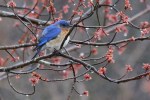
We didn’t expect to see much this weekend with the gloomy weather, but this beautiful bird surprised us by landing in a tree in the front yard. It stayed around for quite a while yesterday.
Posted by: amassaff | April 23, 2012
Eastern Bluebird – Barnaby River

Posted in Anne Assaff
Posted by: dhgadd | April 19, 2012
First butterfly of 2012
Went for a walk at French Fort Cove on April 18th and saw my first butterfly of the season- a Mourning Cloak . We didn’t have the camera so no picture. The Mourning Cloak can overwinter but an incoming Red Admiral was seen too in Miramichi. There is a new web site called E Butterfly – similar to Ebird- ebutterfly.ca – it is a good site even if you are not doing the Maritime Butterfly Atlas
Posted in Uncategorized | Tags: butterfly
Posted by: PMGDD | April 19, 2012
American Woodcock, Redmondville – Jim Saunders
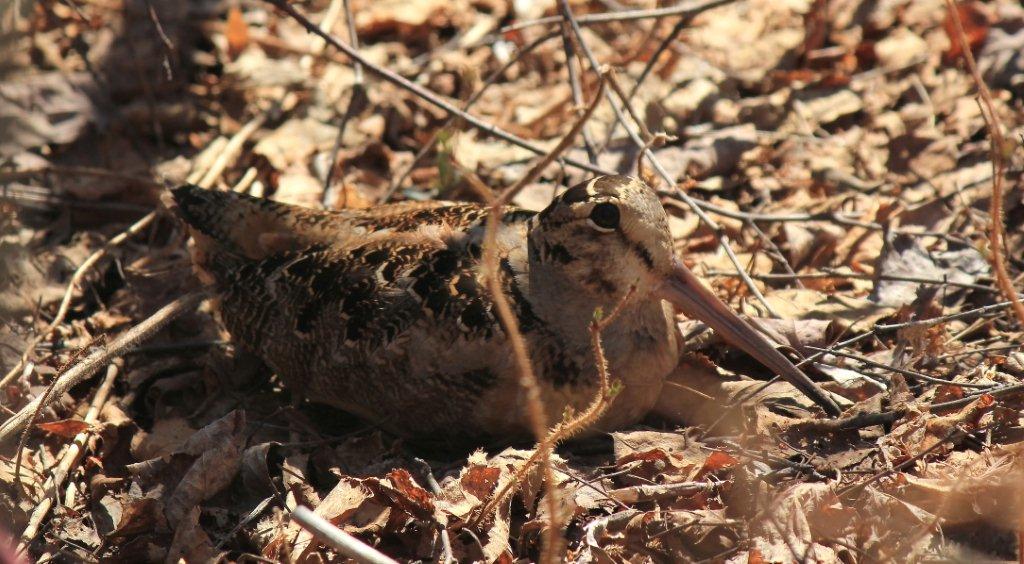 One of those serendipitous finds. I had gone into a logging road to have a look for a white pine seedling and on my way out about 10 meters from Route 11 I glanced to the left. I didn’t see the Woodcock but what I saw just didn’t look right. I believe it was the straight line of the bill that looked out of place. I stopped and backed up and there it was sitting on the leaves sunning itself. I didn’t want to get out and set up the tripod so I rolled down the window and used the glass to steady the camera. I got a good shot so I opened the door slowly and got the tripod. The Woodcock got up very slowly, turned and very, very slowly it began to walk away from the road. It was doing the “two-legged shuffle” whereby it presses down with one foot two or three times and then with the other as it moved off. Hoping that it would stop in an opening I tried to outflank it and get another shot using the tripod but I wasn’t successful.
Posted in Jim Saunders
Posted by: PMGDD | April 15, 2012
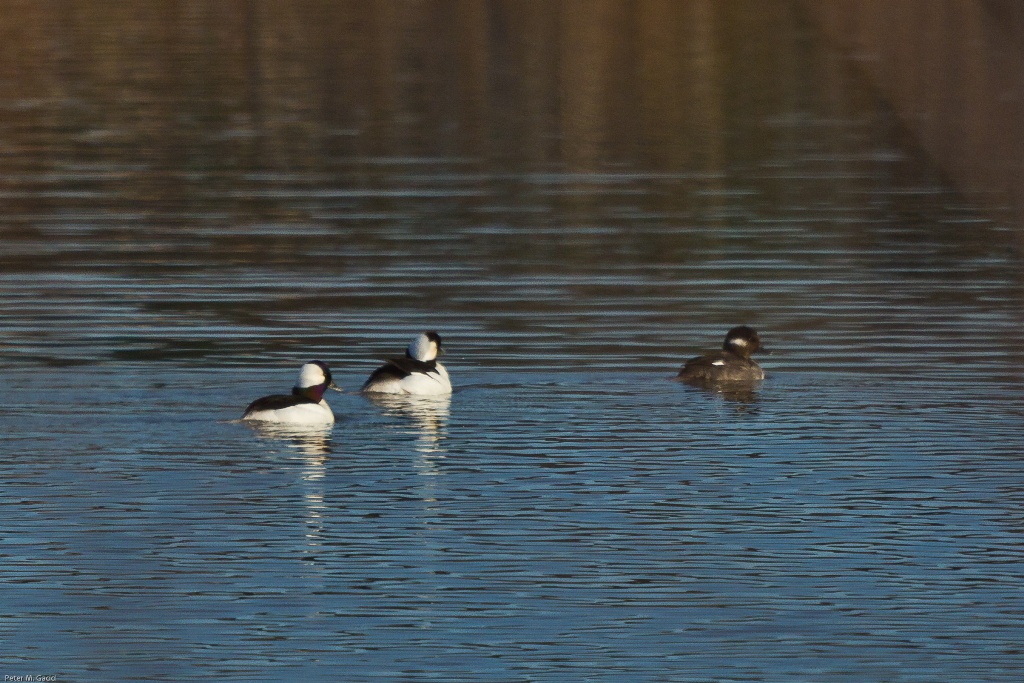
Canadian Point Lagoons and Miramichi Marsh April 15, 2012
We finally saw the Eurasian Wigeon in the upper lagoon. The 3 Buffleheads were in the lower lagoon. There were perhaps almost 3 dozen
Ring-necked ducks (mostly males), a few Goldeneye, an American Wigeon (M), a Mallard (M), pr Green-winged Teals, a Pied-billed Grebe. and some Canada Geese.
At Miramichi Marsh … a dozen or so Treee Swalows arrived late evening yesterday or overnight. There was not much else that was new but there was a lot of activity. 8 Ring-necked Ducks, only two Mallards obvious, 2 A. Wigeons, 1 Green-winged T., Grackles, R-w Blackbirds, Song Sparrows, Robins(2), Crows (3), Chickadee (1) 3 Pied-billed Grebes and at least 2 were calling, and of course Ring-billed Gulls. One pair ofCanada geese seem to have settled on a nesting site … on the nearest somewhat overgrown, perhaps abandoned Beaver lodge. Deana and Peter


Posted in Peter Gadd
Posted by: amassaff | April 12, 2012
Miramichi Marsh, April 12, 2012


There was a skirmish between two male Canada Geese when one tried to steal the other’s mate. Quite the soap opera happening down at the marsh again this spring 🙂
Posted in Anne Assaff
Posted by: PMGDD | April 11, 2012
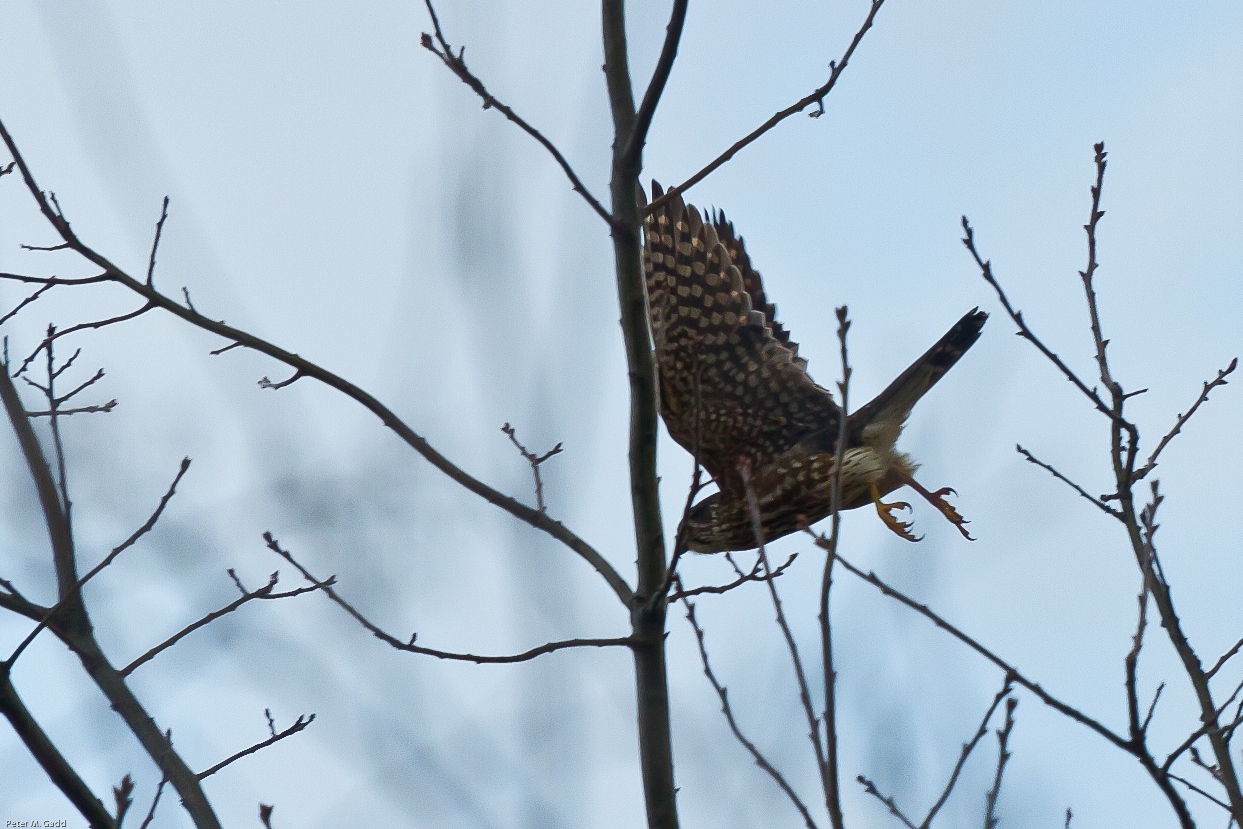
Merlin at Feeders
At suppertime this evening a Merlin came I think to see if our resident Red Squirrel could be on its menu. Last I saw of her (I think it’s a female) she was chasing a Mourning Dove over the fence. I couldn’t find any signs indicating if she was successful. These pictures seem to show she had already had a meal as it seems there is blood on her right leg and around her beak. She was essentially on the patio! There for perhaps almost 10 minutes looking things over.


Posted in Peter Gadd
Posted by: PMGDD | April 4, 2012
Tragedy in Redmondville – Jim Saunders
As you will realize, this article presents many questions which can only be addressed by more observation which will have to be next winter. However even though it is incomplete I feel it may be of interest.
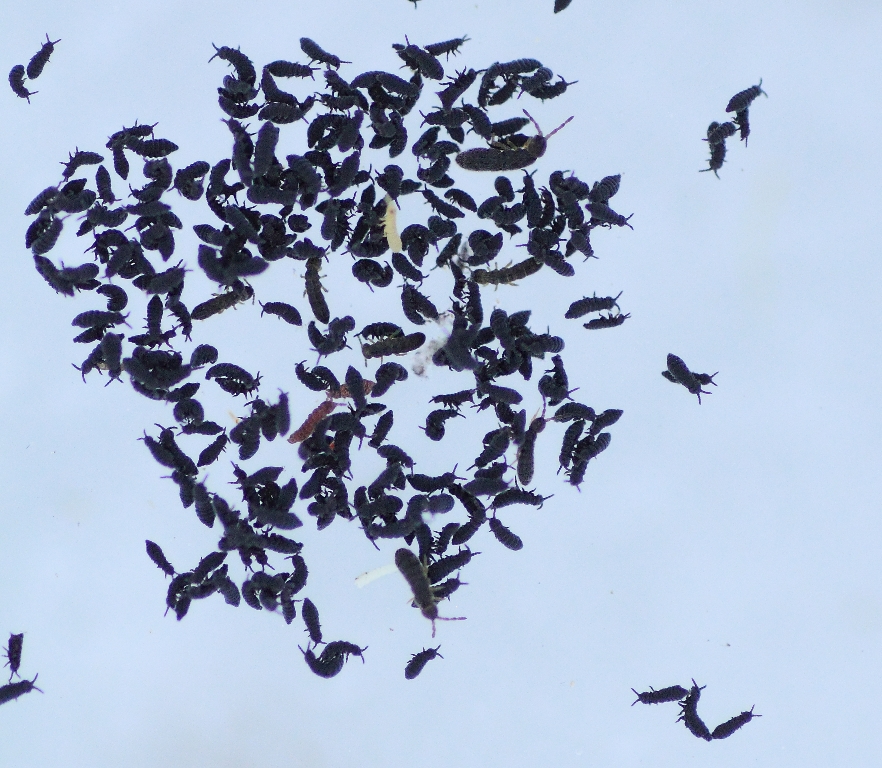
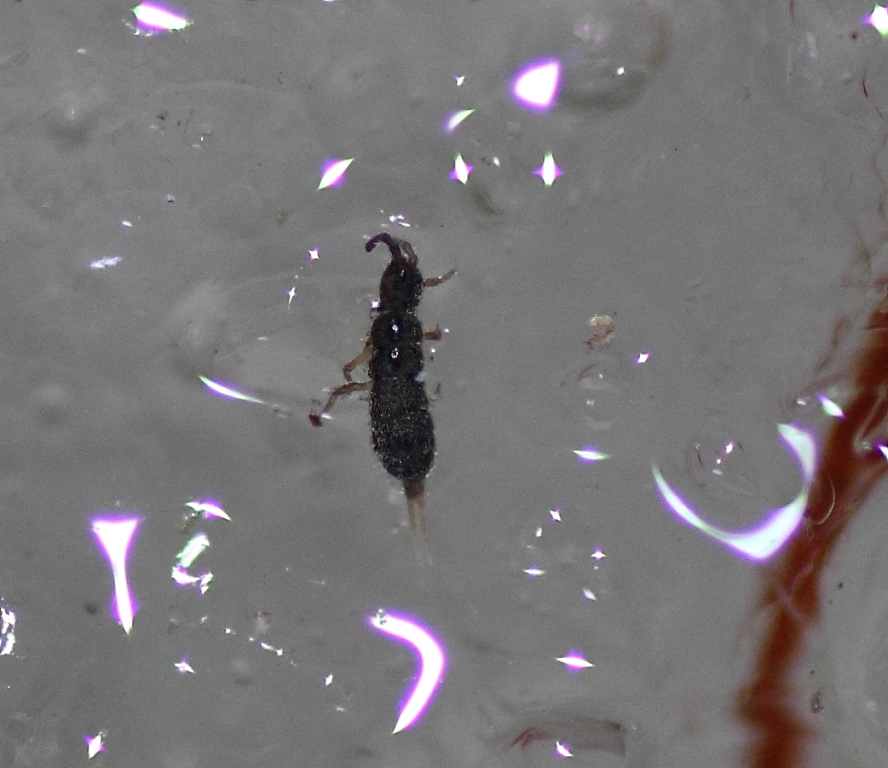
On Sunday, March 18 the Springtails in Redmondville were having a great time on the surface of small pools of water that had formed on the road as you can see in # 3. As you can also see in # 3, many of the Springtails have maneuvered themselves into positions whereby they are either on top of or sideways to a neighbour(s). My theory is that they must sense that there is something solid under their legs before the spring is released. One website I visited said that Springtails can use their springs in water but I didn’t observe that in this case. Unfortunately in most cases the melt water that was running down the sides of the depressions in which the pools had formed, carried those who had successfully catapulted out of the pool back down into the water.
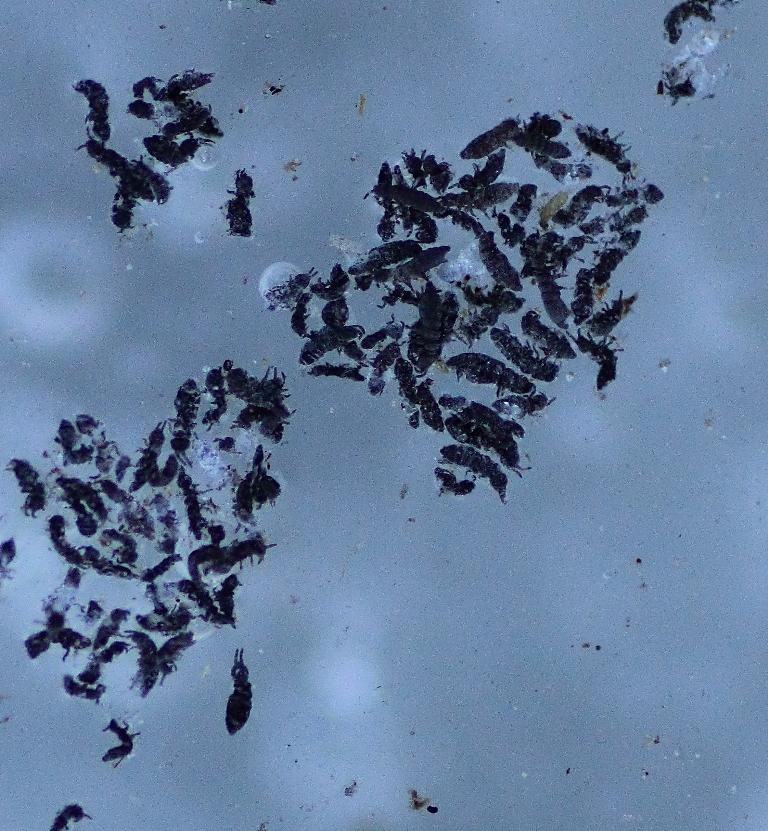
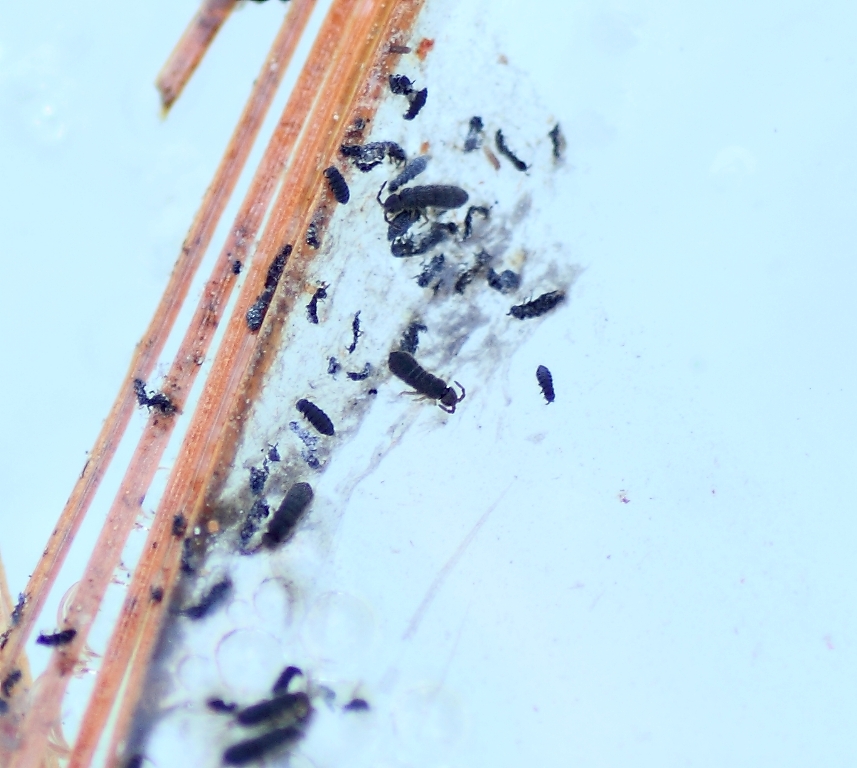
I went back on Wednesday, March 21 to get some more photos. From a standing position Springtails were visible but upon taking a closer look, I discovered they were dead, as can be seen in # 1 and # 2.
My thought after seeing them on the water on Sunday was that since they were making use of the water surface tension, they would be able to disperse after the water froze underneath them. However I didn’t know how complex events could possibly be as this happens.
From www.marietta.edu/~mcshaffd/aquatic/sextant/physics.htm the following:
“On the surface, water striders, Collembola (Springtails), and a host of other small animals try to avoid making a transition – that is, sinking. They all have hydrophobic bodies with one exception – the claws. The claws are hydrophilic and penetrate the water surface, allowing the animal to “get a grip” on the water surface.”
Also I tried to find out if insects that use surface tension can get trapped as the water freezes but I had no luck. Isn’t it likely that anything that makes use of surface tension could be easily trapped due to the water expanding and freezing around the parts of the leg (such as minute hairs) that make dents in the surface tension? Do the hydrophilic Springtail claws which penetrate the water surface get stuck in the ice that forms above them as the air temperature drops? There may be evidence in # 1 that this is what happened. It appears to me that some of the bodies are missing legs or parts of legs. What do you think? Compare # 1 with # 3. Did this happen as they tried to struggle free?
The ice and snow melted during the day and as the volume of water built up, some bodies were swept downstream. # 2 is a photo of some that were caught by pine needles laying in the water flow. There were also many bodies located upslope from the channel which may have lost flotation as the water level dropped during the downward erosion of the channel.
From www.waterencyclopedia.com/En-Ge/Fresh-Water-Physics-and-Chemistry-of.HTML the following:
“The mutual attraction of water molecules allows water to form thin and continuous films and also creates surface tension. At the surface of water, the molecules grab on to each other even more tightly because there are no molecules pulling on them from the air above. As the molecules on the surface stick together, they form an invisible “skin” called surface tension. For instance, pond skaters (sometimes also called water striders), along with other similar insects, can walk on the water without sinking because the surface tension of the water is strong enough to hold them. The feet of the insects actually make tiny dents in the surface tension—but not enough to break the tension—allowing them to stride or skate across the water. ”
On March 24 with the temperature dropping below zero, I visited the road again. Again there were many bodies on the ice surface. I have attached a photo of one with its furcula (spring) showing (#4). This led me to think that the spring may have been used in trying to free itself and because of its position at the rear of the body it would tend to lift the rear end. Consequently the rear and middle legs might be apt to be torn off in this activity. Eventually there might only be one leg left intact but trapped by ice.
I stand corrected about them springing off the water. On March 24 I did observe one doing so.
Certainly many more questions to answer. – Jim
Posted in Jim Saunders
Posted by: PMGDD | April 4, 2012
Masked Shrew – Jim Saunders
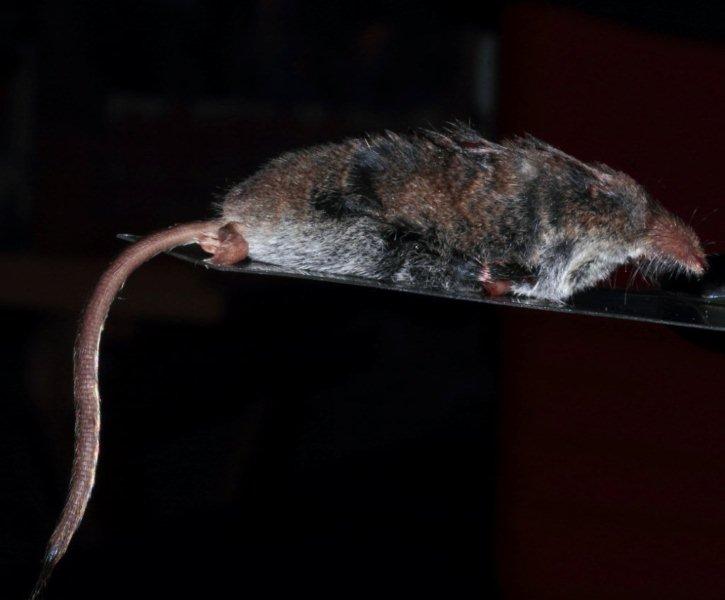
While walking on Ken Cook’s road on Monday, February 20, I spotted something that turned out to be a Masked Shrew which has a black-tipped tail. I believe it had been run over by a snowmobile. Thanks to Dave for confirmation of the ID:
“It is the Masked Shrew (Sorex cinereus) which is very common to abundant in N.B. “The Land Mammals of New Brunswick” (Dilworth, 1984) gives the following length measurements with the averages given first followed by the ranges in parentheses: Total length – 97 mm (82 – 120), Tail length – 41.1 mm (32 – 50)
Both the total and tail lengths of your specimen fits within these values very well with the total length being about 90 mm and the tail being 44 mm long judging by the first photo.
My first question was why was it on the road? I thought it might have been after Springtails which were quite plentiful along the east side of the road. However according to the sites I visited, Springtails aren’t listed as part of their diet. It might require a late night outing to find out because it is reported that the Masked Shrew is most active between 1 and 2 am.
From the Adirondack Ecological Centre website( www.esf.edu/aec/adks/mammals/masked_shrew.htm), “The masked shrew has the largest range of any North American shrew, and occurs throughout Alaska, Canada, the northern third of the U.S., as well as portions of the Great Basin, Rockies, and Appalachians.” Also “Insects comprise 65% of the diet, which also includes centipedes, spiders, earthworms, and carrion. Occasionally, masked shrews kill and consume small animals such as salamanders and nestling birds. Small, soft seeds may form part of the winter diet.” There is a lot of other interesting information about the Masked Shrew on this site.
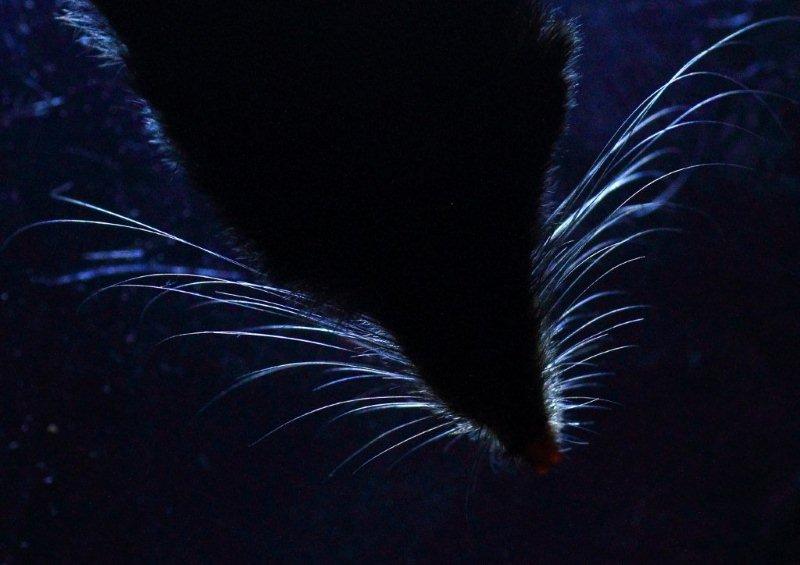
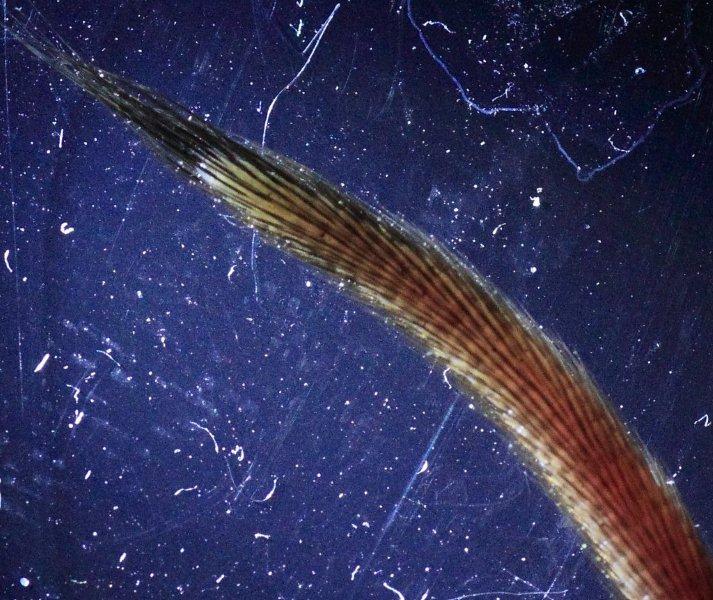
Masked Shrew 1 is a photo with the hairs around the mouth and nose. These are important sensors that help the shrew navigate and detect food. – Jim and Dave
Posted in Jim Saunders
Posted by: PMGDD | April 4, 2012
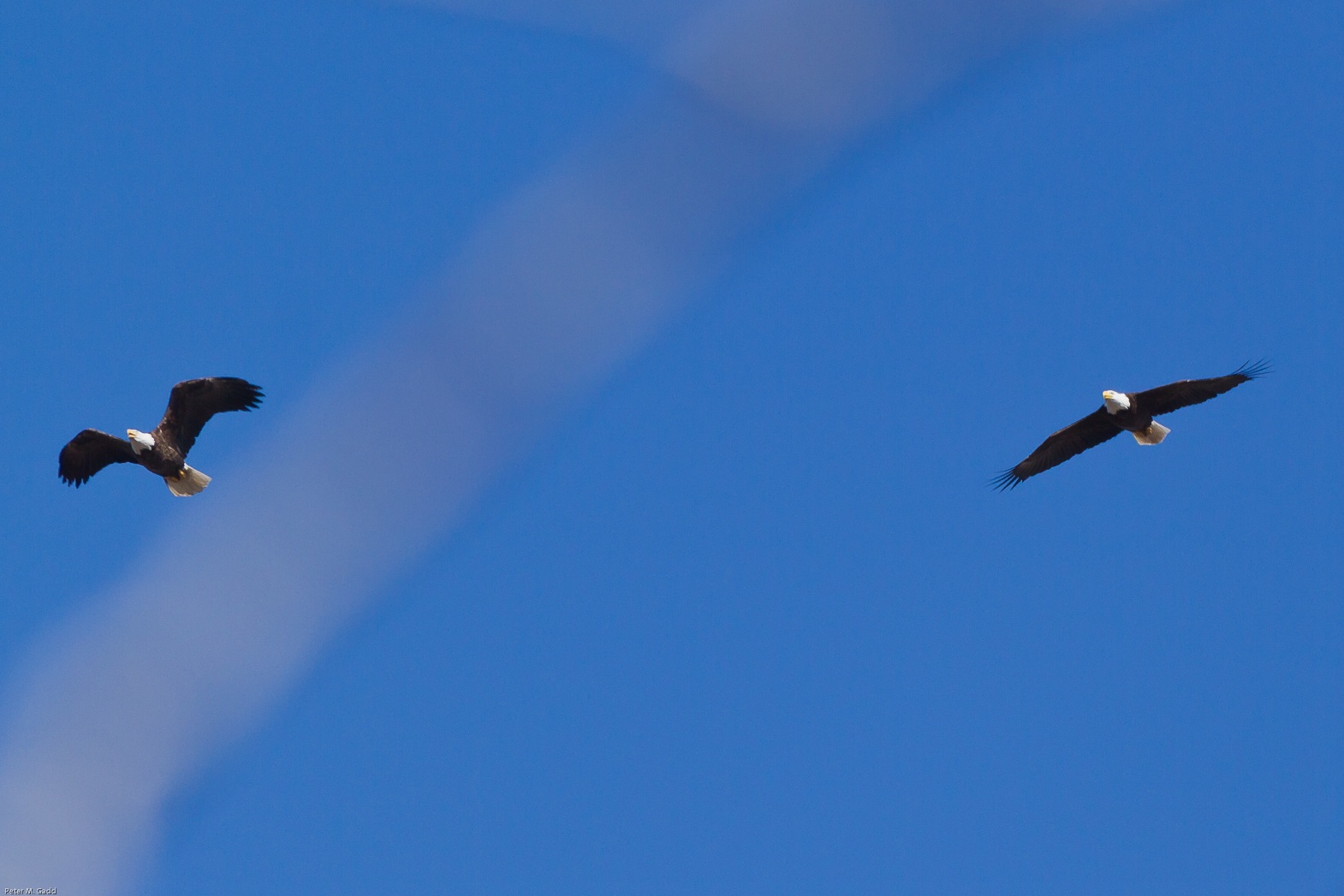
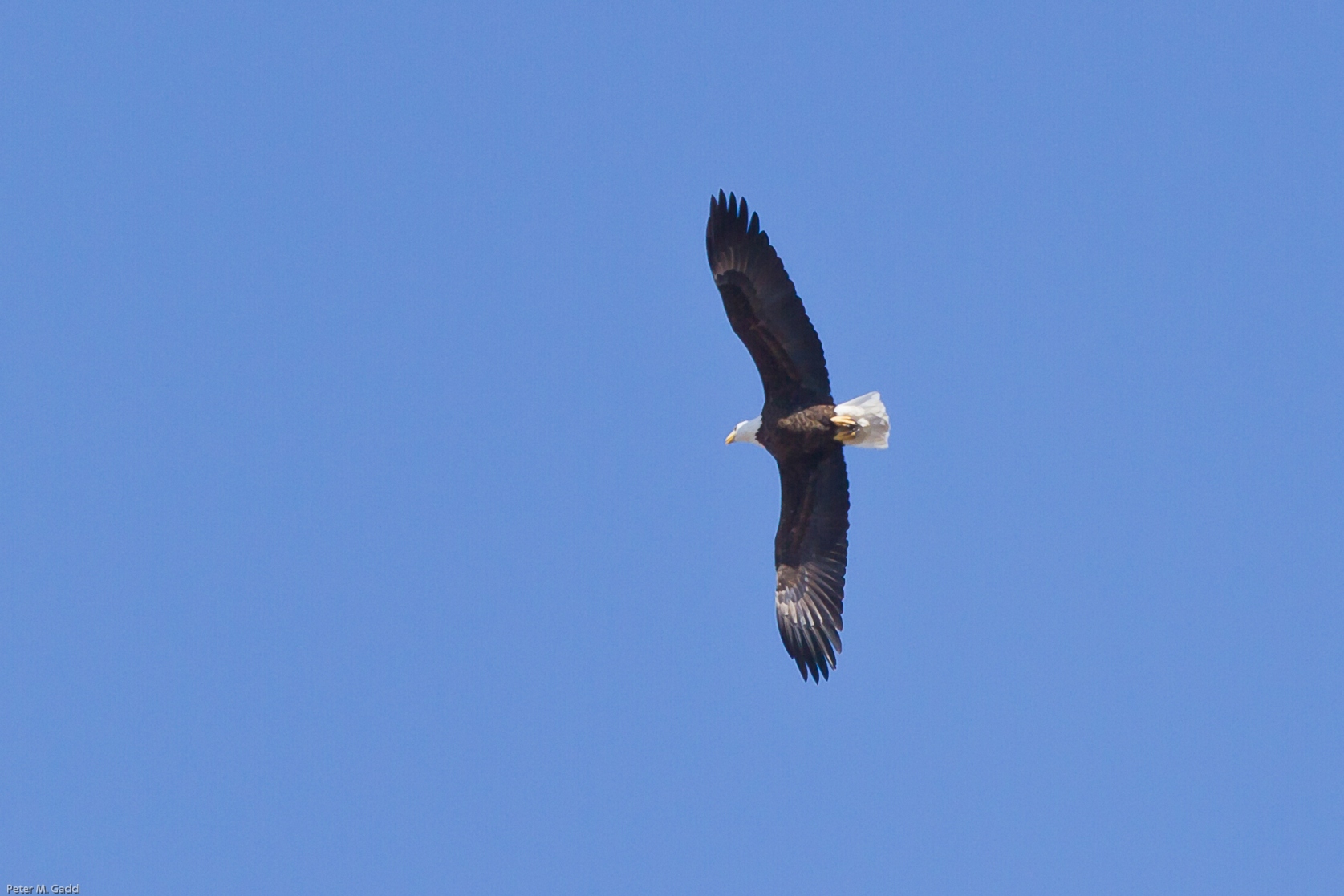
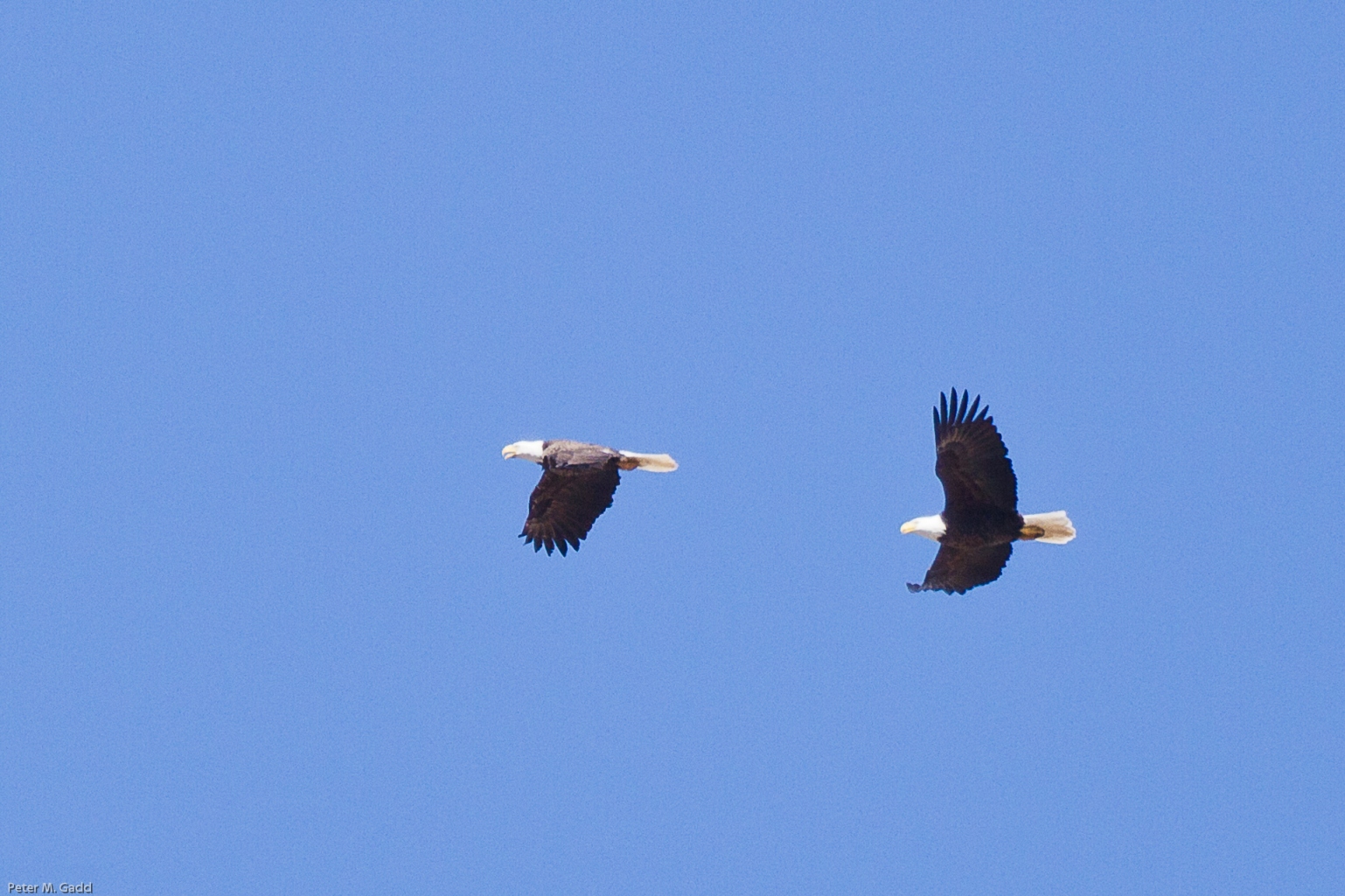
A Fly-Past at the Miramichi Marsh
These two Bald Eagles were chasing each other above the marsh on Monday afternoon. A third was in the distance.
Posted in Peter Gadd
Posted by: PMGDD | April 4, 2012
Red-winged Blackbird at Breakfast?
Last Monday a Red-winged Blackbird seemed to be eating the extremely tiny seeds of a cattail. I watched it for about 15 minutes. There seems so little to eat as spring has not yet “sprung”. The Canada Geese and Blackbirds don’t seem to be around the marsh during the day, only in the mornings and evenings. They must be going elsewhere to find food. We have seen Red-winged Blackbirds “hanging out” with Grackles in our garden area. See a video clip:
Posted in Peter Gadd
 Nature Miramichi: